Case study 04 · The Kit Machine
An automated creative production pipeline
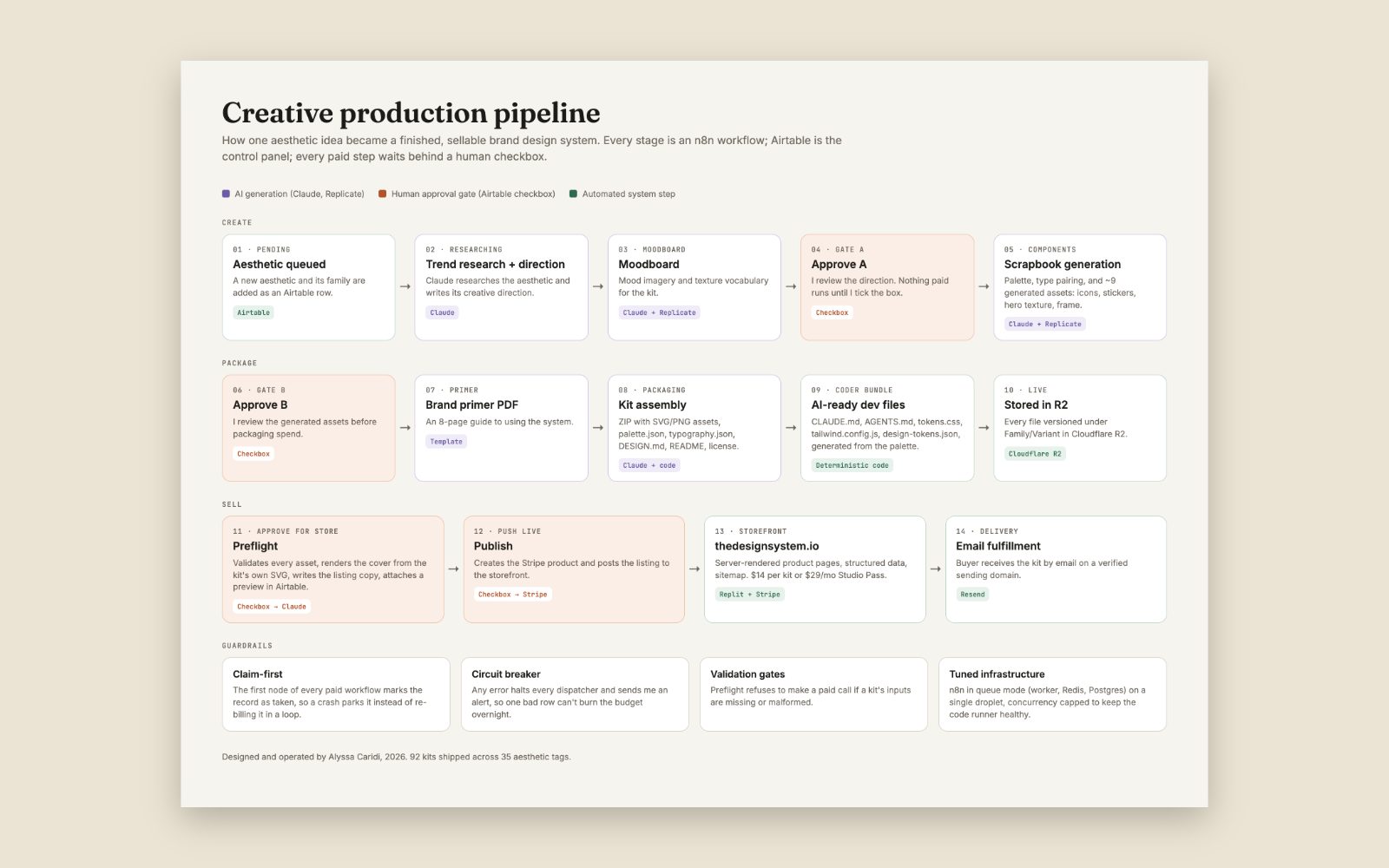
The Kit Machine researched, designed, packaged, and published 92 brand systems, with a person approving every paid step.

The question
A good brand system takes a designer days: research the aesthetic, build a moodboard, choose a palette and type, draw icons, write usage guidance, package the files. I wanted to encode that process, keep human taste at the decision points, and let automation do the production. AI spend could only happen on ideas I had already approved.
How it worked
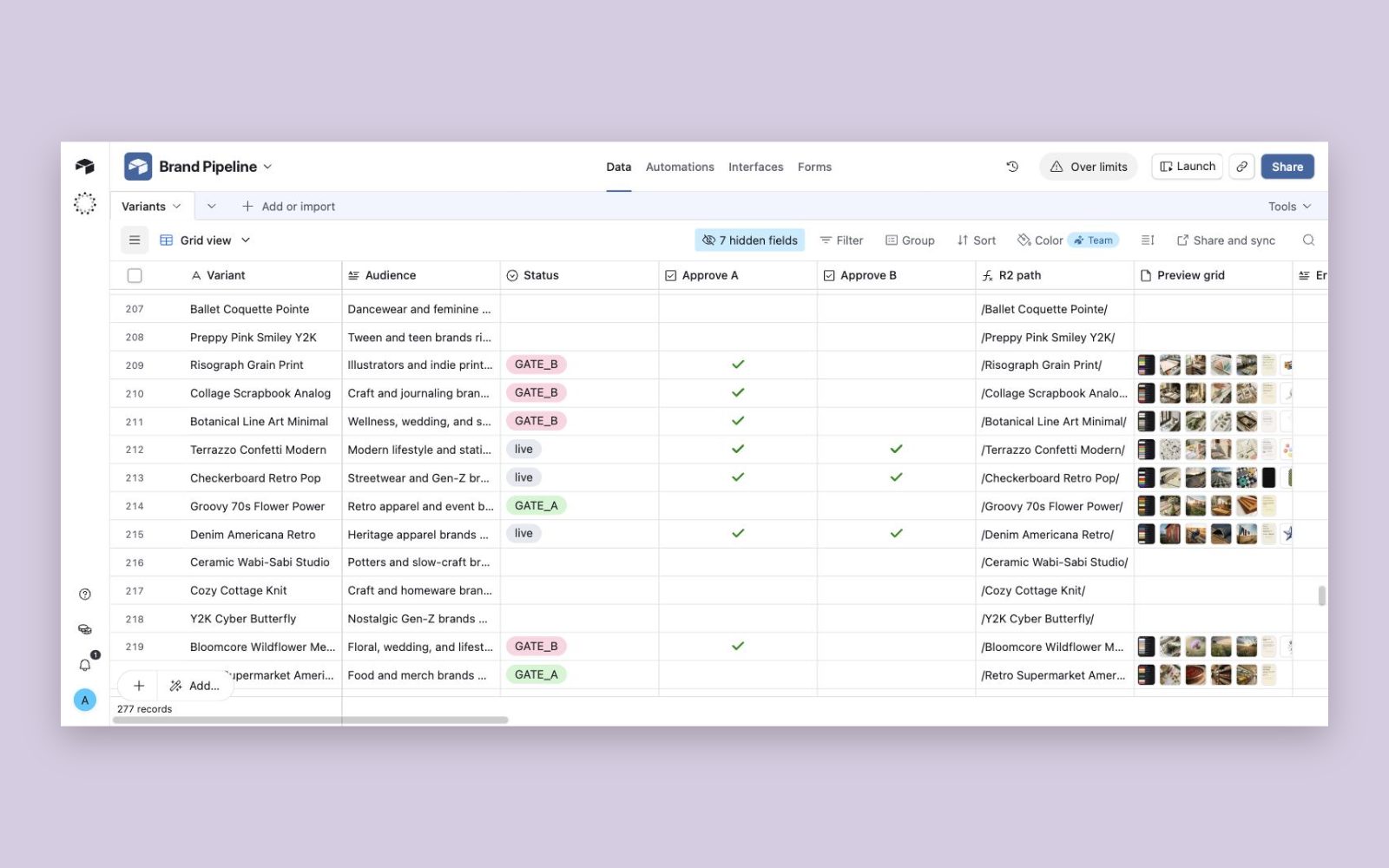
Each kit was a row in Airtable moving through stages, and every stage was an n8n workflow. Four checkboxes were the entire interface:
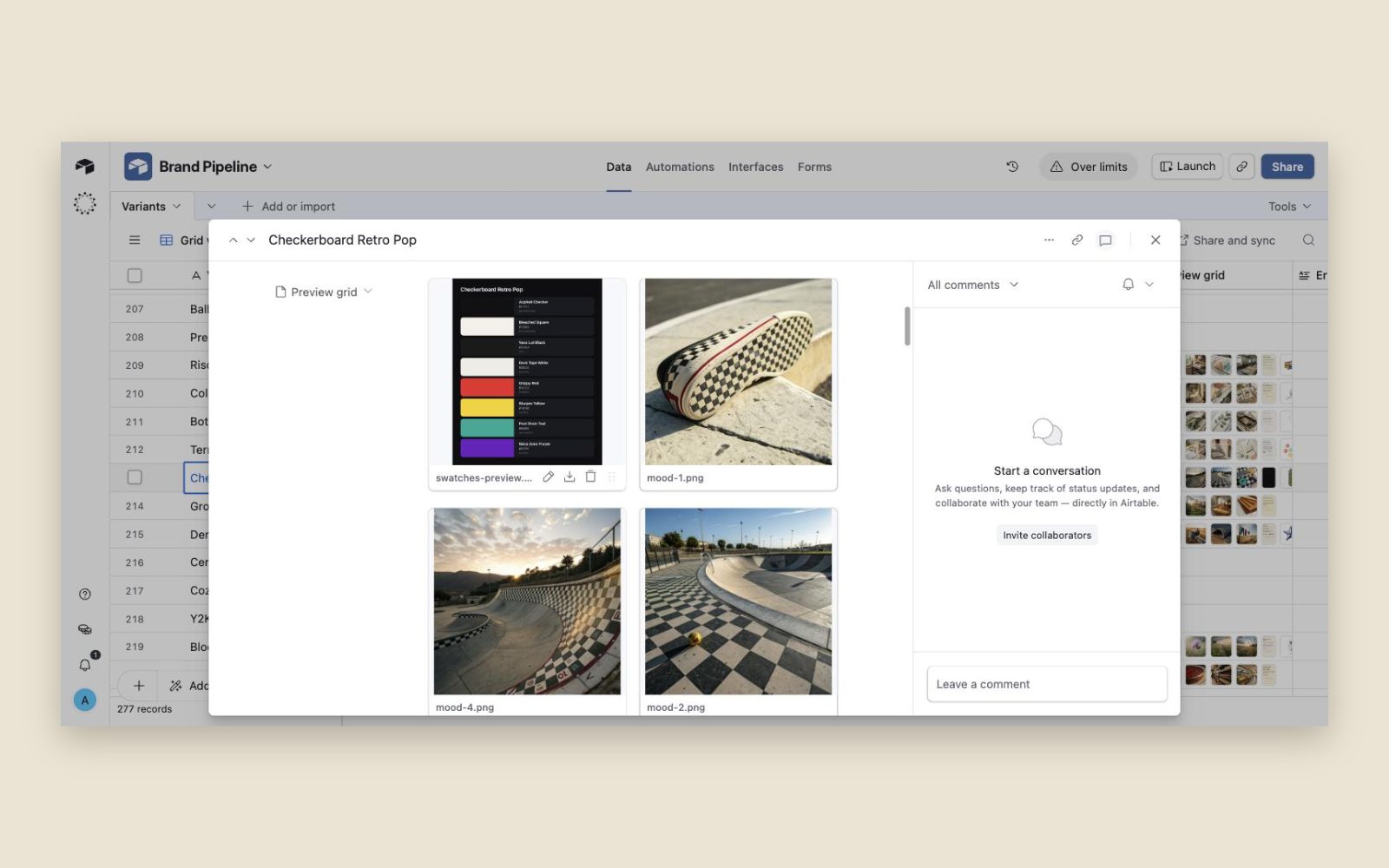
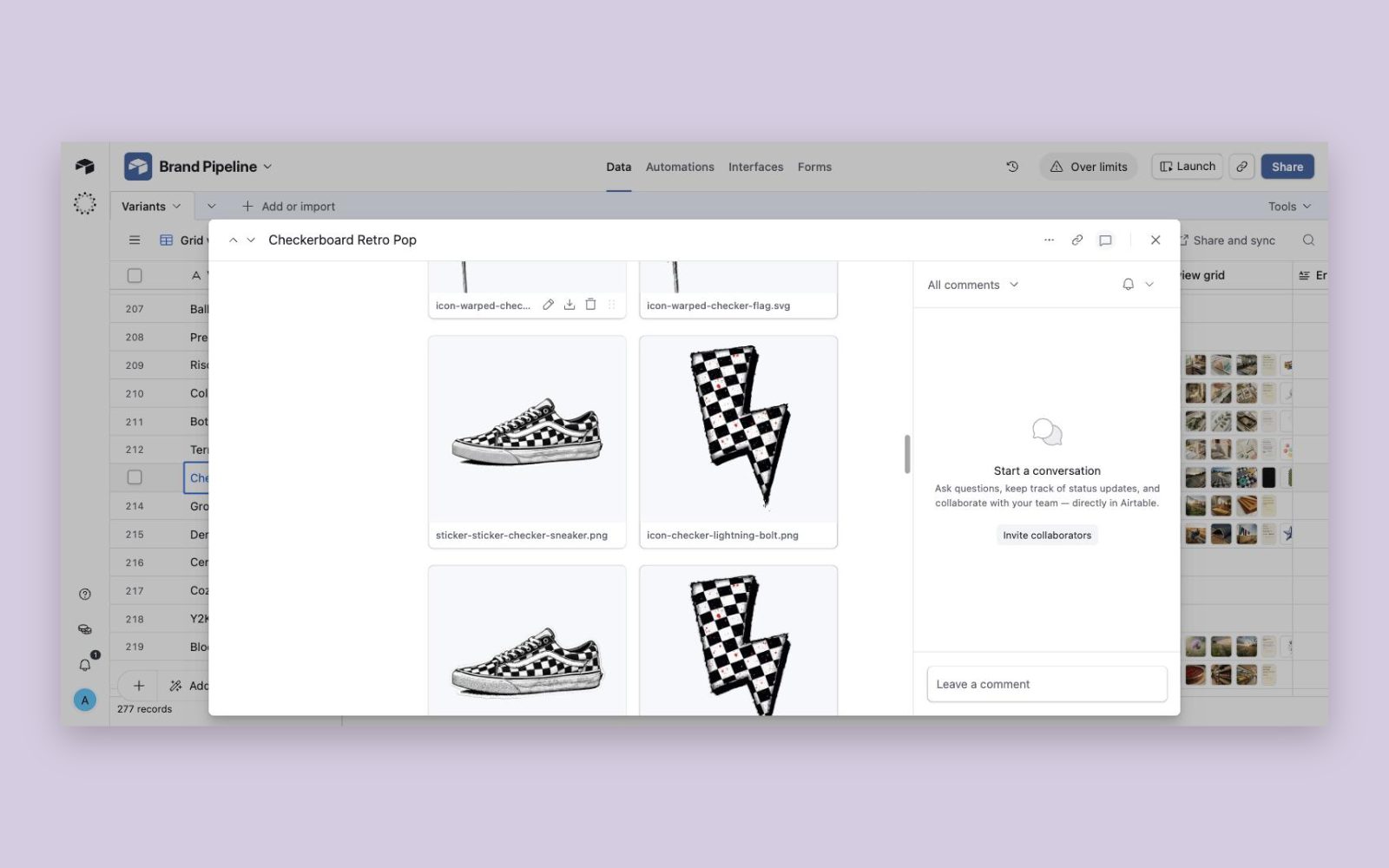
- Approve A. Claude researches the aesthetic and writes the creative direction; after my approval, Replicate generates about nine assets.
- Approve B. The pipeline writes the brand primer and packages the full kit, including the coder bundle.
- Approve for store. A preflight check validates every asset and shows me the listing before it exists.
- Push live. It creates the Stripe product and publishes the listing.
Designed for cost and failure
- A human approval before every paid stage.
- Claim-first: each paid workflow marks its record as taken before any API call, so a crash parks the record instead of re-billing it every minute.
- A circuit breaker that halts everything and alerts me on any error.
- Validation gates that refuse to make a paid call when an input is missing.
Hard problems I solved
- Chronic halts. Failure alerts hit 900 in about a week. I traced it to the server running ten jobs at once on a single CPU, starving the code runner. Capping it at three fixed it.
- Silent failures. A step reported success while doing nothing because one node was disabled. I found it, and now treat "succeeded instantly" as a red flag.
- Retrofitting the catalog. When the product shifted to developers, I regenerated the coder bundle for every existing kit without touching the originals.
Result
92 brand systems researched, designed, packaged, and published from a spreadsheet, with a person approving every step that cost money.